

Drinkware Industry Insights
2026 Drinkware Forecast: Why Recycled Stainless Steel (RSS) Is the New Industry Standard

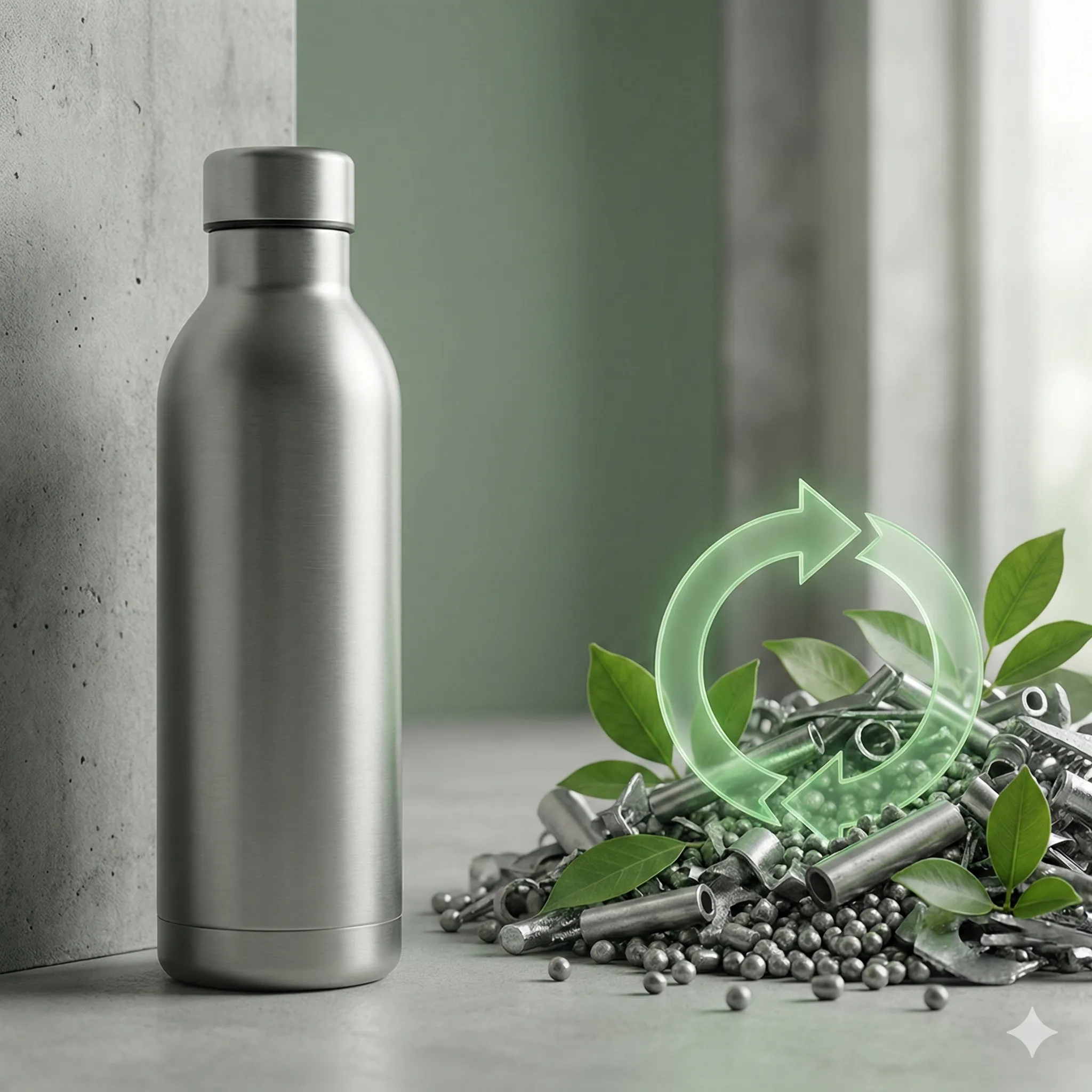
Sustainability is no longer a marketing slogan—it is now a procurement requirement.
As we move into 2026, the most influential trend in the global drinkware industry is the rapid adoption of Recycled Stainless Steel (RSS).
For B2B buyers, choosing RSS is no longer just about environmental responsibility. It has become a strategic decision driven by regulation, consumer demand, and long-term brand value.
What Is Recycled Stainless Steel (RSS)?
Recycled Stainless Steel (RSS) typically refers to 18/8 stainless steel produced using post-consumer and post-industrial scrap rather than virgin iron ore.
Unlike recycled plastics, stainless steel can be recycled indefinitely without degrading material performance. The result is a bottle that delivers the same durability, corrosion resistance, and food safety as traditional stainless steel—at a much lower environmental cost.
Leading global brands and circular economy advocates are now pushing for 80–90% recycled content in new drinkware product lines.
Why B2B Buyers Are Switching to RSS
1. Reduced Carbon Footprint
Producing recycled stainless steel consumes significantly less energy than extracting and refining virgin ore.
For brands with ESG (Environmental, Social, Governance) commitments, RSS helps meet carbon reduction targets and sustainability reporting requirements.
2. Strong Consumer Demand for “Green” Products
Gen Z and Millennial consumers are actively choosing products with clear sustainability claims.
A water bottle labeled “Made from 90% Recycled Stainless Steel” often commands higher shelf value and improves conversion rates in both retail and e-commerce channels.
3. Increasing Regulatory Pressure
Governments in the EU and the United States are tightening regulations on single-use plastics and encouraging circular manufacturing models.
Using RSS helps future-proof your product line against upcoming compliance requirements and import regulations.
How to Verify Recycled Stainless Steel (Avoid Greenwashing)
Not all “eco-friendly” claims are equal. To ensure authenticity, B2B buyers should verify recycled content at the factory level.
Request RCS Certification
Ask your manufacturer for Recycled Claim Standard (RCS) documentation.
This third-party certification verifies the percentage of recycled material used and tracks it through the supply chain.
Audit the Supply Chain
Work with factories that maintain transparent sourcing of stainless steel scrap and can clearly explain whether the material is post-consumer or post-industrial.
The Future of Drinkware Materials
By 2027, Recycled Stainless Steel is expected to become the baseline material for premium drinkware brands. Early adopters will benefit from stronger brand positioning, improved ESG scores, and higher trust among environmentally conscious consumers.
Final Takeaway
Recycled Stainless Steel is no longer a trend—it is the new standard.
For B2B buyers looking to stay competitive, compliant, and aligned with modern consumer values, adopting RSS now is a smart long-term investment that strengthens both sustainability credentials and brand equity.