


Drinkware Industry Insights
Prop 65 Compliance: The Truth About Lead in Vacuum Bottles

Is Your Supply Chain Prop 65 Compliant? The Truth About Lead in Vacuum Bottle Sealing
In recent years, several well-known drinkware brands have faced costly recalls due to lead contamination.
For B2B buyers importing stainless steel vacuum bottles into the United States—especially California—or Europe, Prop 65 compliance is not optional. It is a legal and commercial necessity.
Understanding where lead risks originate in vacuum bottles is the first step to protecting your brand, your customers, and your supply chain.
The Hidden Risk in Vacuum Bottles: The Sealing Dot
Most stainless steel vacuum bottles are manufactured with a small vacuum port at the bottom. This hole is used to extract air between the inner and outer walls during the insulation process.
Traditional Manufacturing Method
Historically, many factories sealed this vacuum port using a lead-based solder dot.
At first glance, this sealing point appears harmless because it is usually covered by a decorative bottom cap. However, this outdated process carries serious compliance risks.
Why Lead Sealing Violates California Proposition 65
The Real Danger
If the bottom cap breaks, loosens, or falls off during use, transport, or long-term wear, the lead solder becomes exposed.
This creates a direct risk of consumer contact with lead—an element strictly regulated under California Proposition 65, which enforces extremely low limits on lead exposure.
The Consequences for Brands
Non-compliance can result in:
- Product recalls
- Legal penalties and lawsuits
- Forced labeling warnings that damage brand image
- Loss of key retail or distribution partners
For importers, the liability rests with your brand, not the factory.
The Modern Standard: Lead-Free Vacuum Sealing Technology
Responsible and export-focused manufacturers have already transitioned to lead-free sealing methods.
Common Lead-Free Solutions
- Glass bead sealing
- High-temperature laser or TIG welding
- Certified lead-free alloy sealing
How It Works
Instead of lead solder, a glass bead or approved lead-free material is melted to permanently seal the vacuum port. This creates a strong, stable seal without introducing any toxic substances.
Why Lead-Free Sealing Matters
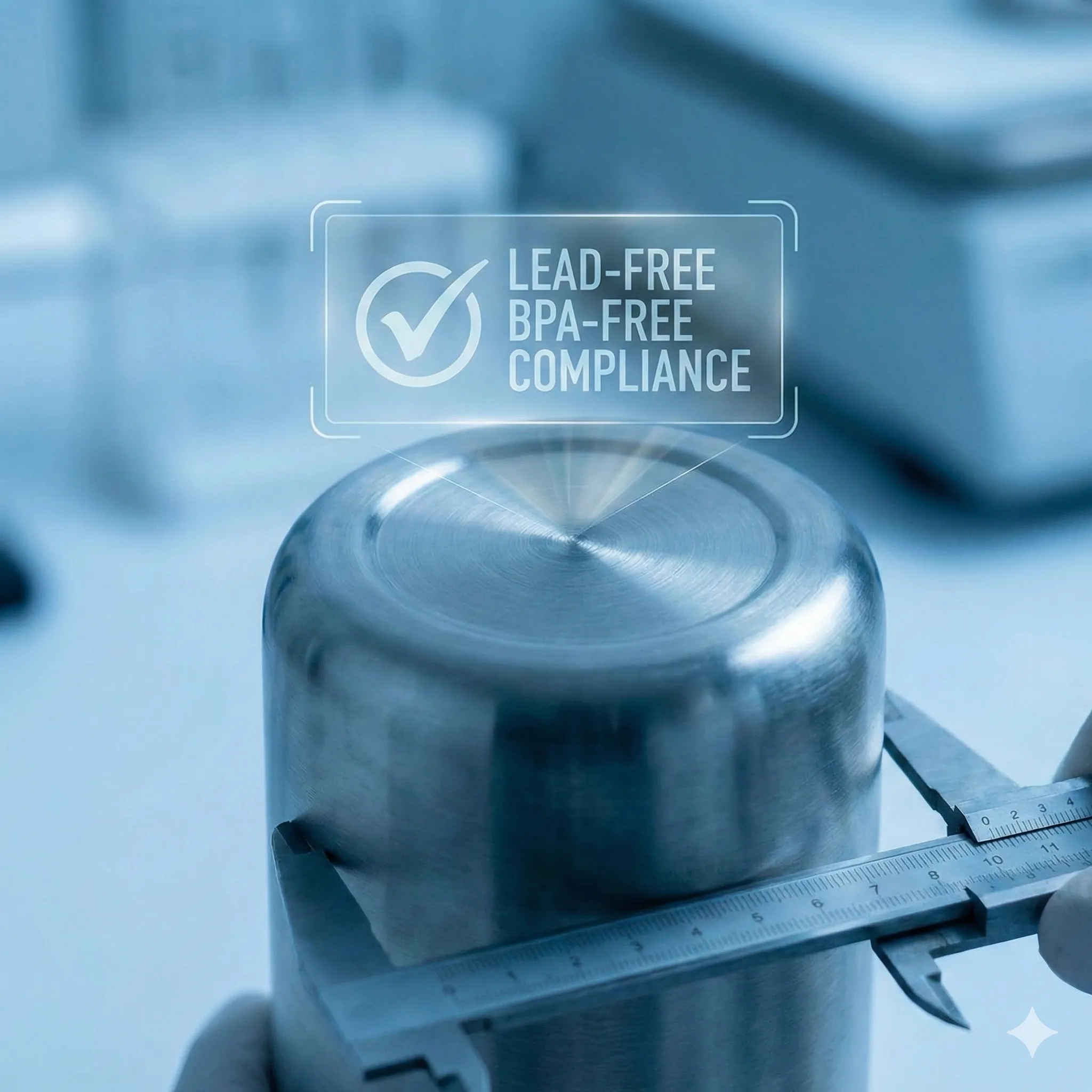
Lead-free vacuum sealing ensures full compliance with:
- California Proposition 65
- FDA food contact material regulations
- LFGB standards (EU/Germany)
More importantly, it protects your brand from:
- Costly recalls
- Regulatory audits
- Long-term reputational damage
In today’s compliance-driven market, lead-free sealing is no longer a premium feature—it is the baseline requirement.
How to Verify Prop 65 Compliance with Your Supplier
Compliance cannot be assumed. It must be verified.
Key Questions to Ask
Ask your supplier directly:
“Do you use lead-free sealing for the vacuum port of your bottles?”
Documentation to Request
- A recent third-party lab test report (SGS, TÜV, Intertek)
- The report should specifically test lead content in the sealing material, not just the stainless steel body
Visual Inspection Tip
High-quality manufacturers typically:
- Cover the sealing area with a durable stainless steel bottom cap or
- Use a secure silicone base that is difficult to remove without tools
Loose or easily detachable bottom caps are a red flag.
Final Takeaway: Compliance Starts at the Factory Floor
Prop 65 compliance is not solved by packaging or marketing—it is determined during manufacturing.
By partnering with a factory that prioritizes lead-free vacuum sealing processes, you:
- Reduce legal and financial risk
- Protect consumer health
- Strengthen your brand’s credibility in global markets
In B2B drinkware sourcing, lead-free manufacturing is not just compliance—it is responsible business practice.




19 thoughts on “Prop 65 Compliance: The Truth About Lead in Vacuum Bottles”
Comments are closed.